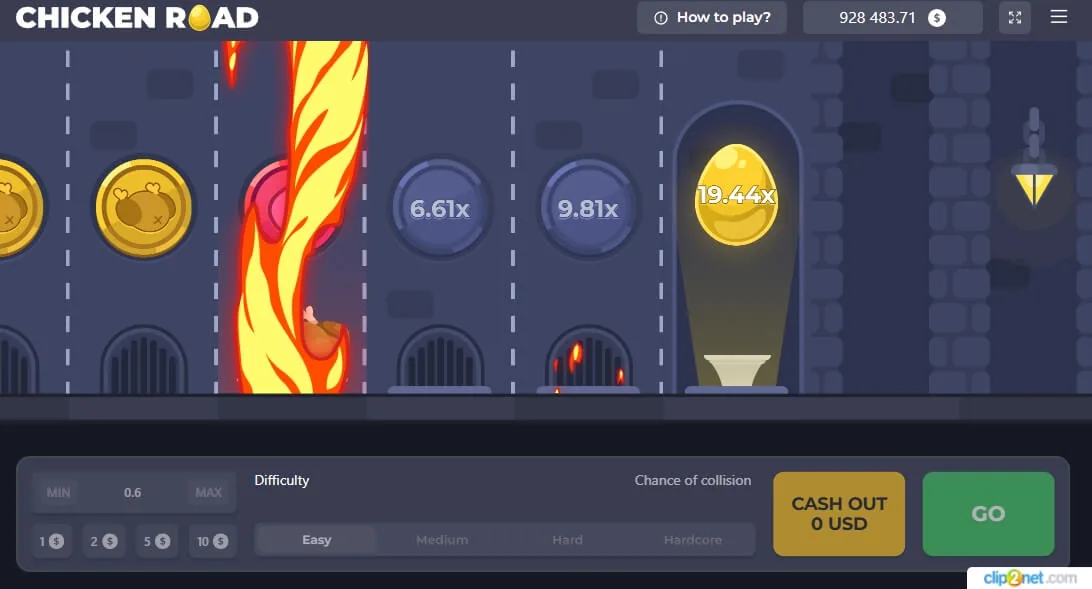
Understanding what the demo can and cannot show is essential before switching to real money. Whilst the mathematical model remains identical, the psychological dimension shifts entirely when actual funds are at risk. This guide examines what Chicken Road's free play reveals, where it falls short, and the practical steps to move from demo credits to real wagers at partner casinos.
What the Chicken Road Demo Delivers
The free play mode mirrors the real money version in almost every technical respect. Players receive a renewable balance of demo credits and can place bets across the same range available in cash mode. The chicken advances through identical traffic patterns, the multiplier scales at the same rate, and the crash mechanic triggers according to InOut's certified random number generator. Visual presentation, sound design, and interface responsiveness remain unchanged.
This fidelity makes the demo valuable for understanding Chicken Road's tempo. The game demands quick decisions—cash out early for modest returns or hold for higher multipliers that may never arrive. Free play lets you experiment with different strategies: conservative exits at 1.5× versus aggressive holds past 5×, or mixed approaches that adapt to streaks. You'll quickly grasp how often the chicken reaches specific milestones and develop an intuition for the game's variance.
The demo also clarifies the interface. Chicken Road's controls are straightforward, but first-time players benefit from risk-free practice with the cash-out button, bet adjustment, and auto-play settings. Understanding the slight input lag inherent to instant win games—where your cash-out request must reach the server before the round resolves—becomes second nature through repeated demo rounds.
The Demo's Inherent Limitations
No amount of free play can replicate the emotional weight of real money at stake. Chicken Road's core tension—whether to secure a guaranteed profit or gamble on a higher multiplier—loses much of its bite when the balance resets at will. Players often adopt reckless strategies in demo mode that they'd never consider with actual funds, skewing their sense of what constitutes sensible risk management.
The demo also conceals the practical realities of bankroll depletion. Losing streaks that would exhaust a £50 deposit in cash mode simply prompt a demo balance refresh. This creates a distorted picture of session longevity and the capital required to weather variance. Similarly, the elation of a big win—say, cashing out at 15× for a substantial multiplier—carries no weight without real money behind it.
Provably fair algorithms guarantee that demo and real money modes use identical RNG processes, but confirmation bias can still mislead. A fortunate demo session might suggest the game is 'hot', whilst a string of early crashes could imply the opposite. Neither observation predicts future outcomes. The demo shows how the game works; it cannot show how you'll respond when genuine stakes alter your judgement.
Switching to Real Money Play
Transitioning from demo to cash mode requires an account at a reputable online casino that hosts InOut Games' portfolio. Registration typically involves providing identification documents to satisfy licensing requirements, a process that can take a few hours to complete. Once verified, players deposit funds via standard methods—cards, e-wallets, or bank transfers—subject to the casino's minimum thresholds.
After funding your account, locate Chicken Road in the casino's instant win or crash game category. The interface will display a toggle or prompt to switch from demo to real money mode. Confirm the change, and your deposited balance replaces the demo credits. Bet limits in cash mode usually mirror those in free play, though some operators impose lower maximums for newer accounts or higher minimums than the demo allows.
Before placing real money bets, review the casino's terms regarding wagering contributions. Instant win games often contribute fully towards bonus rollover requirements, but restrictions vary. Equally important: set personal limits through the casino's responsible gambling tools. Chicken Road's rapid pace—rounds resolve in seconds—can deplete a bankroll faster than traditional slots. A strict session budget and loss limit prevent impulsive chasing.
Start with lower stakes than your demo experiments, even if your bankroll permits higher bets. The psychological shift from play money to real funds often surprises newcomers, and smaller wagers allow adjustment without heavy losses. Many experienced players recommend beginning at 1–2% of your total deposit per round, gradually increasing only if comfortable with the game's volatility.
Track your sessions honestly. Chicken Road's maximum win of £20,000 (at 20,000× on a £1 bet) headlines the potential, but the RTP—an average calculated over millions of rounds—ensures the house edge operates consistently. Short-term variance can produce wins or losses that diverge sharply from expectations. Recognising when a session has turned unprofitable and stepping away is a skill the demo cannot teach.
- Begin with 1–2% of your deposit per bet to manage the psychological transition
- Use the casino's session and loss limits to enforce discipline
- Expect volatility: short-term results will deviate significantly from long-term averages
- Avoid chasing losses—Chicken Road's speed accelerates poor decisions
- Remember that over time, the mathematical edge favours the house
When the Demo Has Served Its Purpose
The free play version of Chicken Road is a diagnostic tool, not a reliable predictor of real money outcomes. Once you understand the mechanics, interface, and rough variance profile, prolonged demo play offers diminishing returns. The game's appeal—risk, reward, and the tension between them—only manifests fully with genuine stakes.
If demo sessions reveal that Chicken Road's pace or volatility doesn't suit your temperament, that's valuable information. Not every game fits every player, and discovering the mismatch in free play costs nothing. Conversely, if the demo captivates you, approach real money cautiously, aware that the shift introduces variables no amount of practice can anticipate. Players must be 18 or older, and responsible gambling resources exist for those who need support. The game is designed to entertain, but over time, the house edge ensures losses outpace wins for the majority.
Frequently asked questions
Does the Chicken Road demo use the same RNG as real money mode?
Yes. InOut Games employs provably fair algorithms that apply identical random number generation to both demo and cash play. The mathematical outcomes are indistinguishable; only the stakes differ.
Can I win real money playing Chicken Road in demo mode?
No. Demo mode uses virtual credits that cannot be withdrawn. To win actual cash, you must switch to real money play at a licensed online casino after creating and funding an account.
How long should I play the demo before using real money?
Enough to understand the controls, tempo, and volatility—typically 20 to 30 rounds. Prolonged demo play won't improve your real money results, as each round is independent and the emotional dimension only appears with genuine stakes.