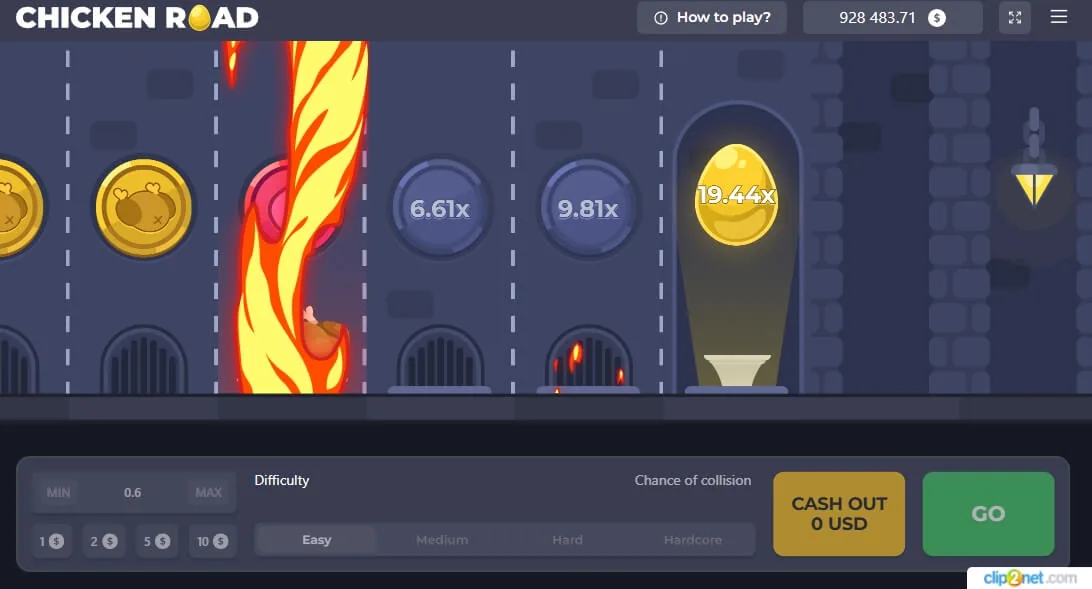
This guide is aimed squarely at beginners. We'll walk through the core mechanics, explain how the multiplier builds, outline practical strategies for cash-out decisions, and flag the key details—maximum win potential, provider background and responsible play. Whether you're testing the waters with small stakes or building confidence for higher bets, understanding how Chicken Road operates will help you make informed choices from your very first round.
How Chicken Road Works: Core Mechanics Explained
Chicken Road belongs to the crash game family, which means you're not spinning reels or matching symbols. Instead, you place a bet, the game begins, and a multiplier starts climbing from 1.00× upwards. Your task is to cash out before the chicken meets an obstacle and the round ends. Cash out successfully and your stake is multiplied by the displayed figure; wait too long and you lose the bet entirely.
The interface is minimal. You'll see the chicken advancing across a stylised road, the multiplier ticking up in real time, and a cash-out button prominently placed. InOut Games has kept the visuals clean—no clutter, no distractions—so you can focus on the one decision that matters: when to lock in your profit. Each round is independent, and the outcome is determined by the game's random number generator at the moment the round launches. Provably fair algorithms underpin the result, though as with all casino games, the house edge ensures the operator holds a long-term advantage.
Maximum win potential sits at 20,000×, a figure that places Chicken Road among the more volatile instant win titles. In practical terms, a £1 bet could theoretically return £20,000, though such multipliers are exceedingly rare. The vast majority of rounds will end well below 10×, and understanding that distribution is essential before you start playing.
Building a Basic Strategy: When to Cash Out
The central challenge in Chicken Road is timing. Beginners often make one of two mistakes: cashing out too early and watching the multiplier soar, or holding too long and losing everything. Neither is wrong in principle—volatility guarantees that both scenarios will happen—but a sustainable approach requires consistency rather than chasing individual outcomes.
A conservative strategy involves setting a target multiplier—say, 2.00× or 3.00×—and cashing out as soon as it's reached. This won't deliver spectacular wins, but it keeps losses manageable and lets you accumulate small profits over multiple rounds. The trade-off is that you'll frequently see the multiplier climb higher after you've exited, which can be frustrating. Accept it as the cost of discipline.
More aggressive players target higher multipliers—5.00×, 10.00× or beyond—accepting that many rounds will end in losses. This approach suits those with a larger bankroll and tolerance for variance. If you go this route, consider reducing your stake size to extend your playtime. A single big win can offset several losses, but only if you're still in the game when it arrives.
Auto cash-out tools, where available, can enforce discipline by removing emotion from the decision. Set your target in advance, and the game will exit automatically when the multiplier reaches that level. It won't improve your odds, but it prevents the common pitfall of changing your mind mid-round and holding too long.
Stake Management and Session Planning
Chicken Road rounds resolve quickly—often in seconds—which means your bankroll can drain faster than you anticipate. Before you start, decide on a session budget: an amount you're comfortable losing entirely. Divide that figure by at least twenty or thirty to determine a sensible stake per round. This approach gives you enough attempts to weather the inevitable losing streaks without exhausting your funds prematurely.
Avoid the temptation to chase losses by doubling your stake after a crash. Martingale-style systems are seductive in theory but catastrophic in practice, especially in high-volatility games. A bad run can wipe out your bankroll in a handful of rounds, and the maximum win cap (20,000×) means you can't simply keep doubling indefinitely.
Set win and loss limits for each session. If you double your starting balance, consider stopping. If you lose your allocated budget, walk away. Crash games are designed to keep you engaged, and the rapid pace makes it easy to lose track of time and spending. Discipline outside the game is just as important as discipline within it.
- Divide your session budget by 20–30 to set a stake per round.
- Never double your stake after a loss.
- Set a win target and a loss limit before you start.
- Take breaks between sessions to maintain perspective.
Understanding RTP, Volatility and Realistic Expectations
Return to player (RTP) figures for instant win games like Chicken Road are typically disclosed by the provider, though specifics can vary by operator. RTP represents the percentage of all wagers returned to players over millions of rounds—an average, not a guarantee. If the RTP is 96%, the house edge is 4%, meaning the game is mathematically weighted in the casino's favour over time.
Volatility in Chicken Road is high. The 20,000× maximum win signals a wide range of possible outcomes, with most rounds ending modestly and a tiny fraction delivering extreme multipliers. This distribution means you'll experience long stretches of small losses punctuated by occasional wins. Accept that losing sessions are more common than winning ones, and treat any profit as a fortunate outcome rather than an expectation.
Provably fair systems allow you to verify that each round's result was determined fairly and wasn't manipulated after the fact. While this adds transparency, it doesn't alter the odds or give you an edge. The game remains weighted in favour of the house, and no amount of verification changes that fundamental reality. Play for entertainment, not as a revenue source, and never wager money you can't afford to lose. If you find yourself chasing losses or playing beyond your means, seek support from organisations like GamCare or BeGambleAware. This is an 18+ activity, and responsible play is non-negotiable.
Where to Play and What to Watch For
Chicken Road is available at reputable online casinos that carry InOut Games titles. When selecting a platform, prioritise licensing (UK Gambling Commission, Malta Gaming Authority or equivalent), payment security, and transparent terms. Check whether the casino offers demo mode, which lets you test the mechanics without risking real money—a useful option for beginners still learning the rhythm of the game.
Pay attention to wagering requirements if you're using a bonus. Many promotions exclude crash and instant win games, or apply higher playthrough terms. Read the fine print before you deposit, and don't assume your bonus balance will be available for Chicken Road.
Finally, take advantage of session history features if the casino provides them. Reviewing your past rounds—cash-out points, multipliers, outcomes—can reveal patterns in your decision-making and help you refine your approach. The goal isn't to predict future results, which are random, but to identify where discipline lapses or where you're consistently overreaching. Improvement comes from self-awareness, not superstition.
Frequently asked questions
What is the maximum win in Chicken Road?
The maximum win multiplier in Chicken Road is 20,000×. This means a £1 stake could theoretically return £20,000, though such outcomes are extremely rare. Most rounds end at much lower multipliers, and the high maximum reflects the game's volatile nature rather than typical results.
Can I use a strategy to guarantee wins in Chicken Road?
No strategy can guarantee wins in Chicken Road or any crash game. Each round's outcome is determined by a random number generator, and the house edge ensures the casino has a long-term advantage. Conservative cash-out targets can manage risk, but losses are inevitable over time. Play responsibly and never wager more than you can afford to lose.
Is Chicken Road suitable for beginners?
Yes, the mechanics are straightforward: place a bet, watch the multiplier rise, and cash out before the crash. However, the high volatility and rapid pace can lead to quick losses if you lack discipline. Beginners should start with small stakes, set strict limits, and use demo mode if available to familiarise themselves with the game before risking real money.